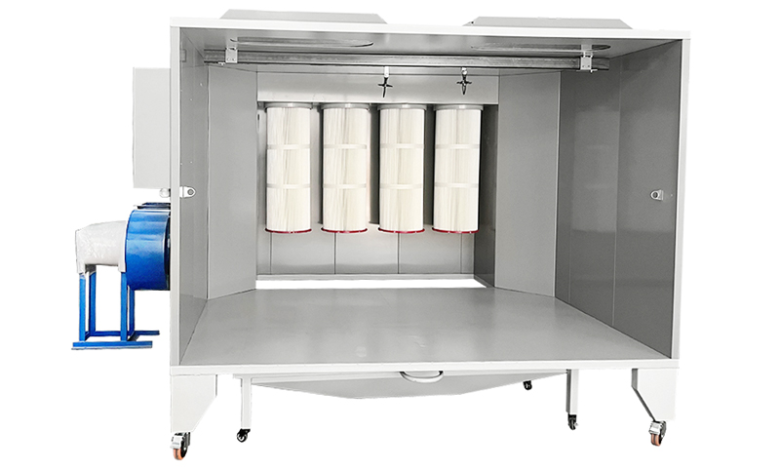
A powder coating machine may look simple from the outside, but behind the scenes, the air handling, filtration layers, and containment controls must work flawlessly. Those purchasing powder coating equipment for sale or designing a full powder coating equipment package depend on strict standards that keep overspray controlled, reduce fire hazards, and maintain compliant working environments.
NFPA 33 Compliance for Dust Containment
NFPA 33 sets the baseline expectations for how powder coating systems must contain airborne particulates. These standards focus heavily on preventing powder buildup inside spray areas, ducts, and recovery systems where ignition risk is highest. By requiring specific booth construction features and airflow levels, NFPA 33 ensures any powder coating equipment remains safe during continuous operation.
Compliance also requires maintaining clear access for inspections and cleaning. Overspray accumulation inside improperly designed systems can lead to flash fires or inconsistent coating performance. Powder coating equipment packages built to NFPA guidelines protect both production quality and operator safety by keeping dust levels under strict control.
HEPA-Grade Final Filtration for Air Recirculation
Facilities that recirculate booth air must rely on HEPA-grade filters to capture fine particulates before sending the air back into the workspace. These filters trap the smallest powder particles to prevent them from escaping containment zones. Powder coating equipment for sale often highlights HEPA filtration as a key differentiator because it directly affects indoor air cleanliness.
Using HEPA filtration reduces respiratory concerns and protects sensitive equipment nearby. Powder coating systems equipped with multi-stage filtration—including primary, secondary, and final HEPA layers—maintain a safe environment while reducing the need for excessive outside air exchange. Clean recirculated air also helps stabilize booth temperature, improving coating consistency.
Minimum Airflow Velocity (Face Velocity)
Booth face velocity determines how quickly overspray is drawn away from the spray zone. Adequate airflow captures powder before it settles onto surfaces or escapes into the facility. Powder coating equipment depends on these airflow benchmarks to ensure a stable spray environment, especially in high-volume operations.
Proper face velocity prevents powder from drifting back toward the operator or into equipment where contamination might occur. Powder coating machine manufacturers design their booths around airflow models that keep particulate movement predictable and controlled. Meeting velocity requirements also reduces filter loading, extending system life.
NIOSH/OSHA Filtration & Respiratory Containment Criteria
Regulations from NIOSH and OSHA focus on worker health. They outline how air must be filtered, how exposures must be minimized, and what protective systems must be in place. Powder coating systems often include dedicated ventilation and filtration pathways engineered to meet these guidelines.
Proper compliance keeps airborne powder levels below permissible limits. Employers using powder coating equipment packages that meet these standards benefit from reduced risk of respiratory irritation, long-term exposure issues, and compliance violations. It also helps operators remain confident that the workspace maintains safe air quality.
Wastewater Filtration for Wash Enclosures
Pretreatment wash stages generate wastewater containing chemicals, particulates, and contaminants that must be filtered before disposal or recycling. Wash enclosures used alongside powder coating equipment require systems that can separate solids from water effectively. This ensures downstream processes stay clean and environmentally compliant.
Facilities increasingly rely on multi-stage wastewater filtration to protect rinse tanks and prevent clogging in spray systems. Powder coating equipment for sale designed with integrated wash filtration keeps coating lines consistent by eliminating residue that could interfere with adhesion or finish smoothness.
UL/Explosion-Proof Electrical and Filtration Equipment Standards
Powder coating involves fine particulate matter that can ignite under certain conditions. UL standards ensure electrical panels, switches, motors, and filtration equipment used in powder coating machines are safe in dust-laden environments. Explosion-proof components reduce ignition risk during normal operations and during maintenance activities.
Manufacturers of powder coating systems follow UL classifications that specify safe distances, wiring methods, and enclosure requirements. This safeguards equipment longevity and ensures operators work around components that meet the highest safety expectations. Without UL-rated parts, electrical faults could quickly escalate into hazardous situations.
EPA Particulate Emissions Control Requirements
The EPA regulates the amount of particulate matter that facilities can release into the atmosphere. Powder coating equipment must include filtration capable of capturing airborne powder before exhaust air exits the building. Multi-stage filtration systems allow operators to maintain low emission levels while keeping equipment performance stable.
Compliance may involve baghouse filters, cartridge collectors, or advanced recirculating systems depending on the facility layout. Powder coating equipment packages that meet EPA requirements reduce environmental impact and help companies maintain permitting without disruptions or fines.
Regular Maintenance and Filter Change Protocols
Filtration systems only perform well when maintained consistently. Operators must follow scheduled filter changes, duct inspections, and airflow verification checks. Powder coating equipment for sale often includes maintenance charts to help teams identify when filters reach capacity or airflow begins to decline.
Ignoring filter cycles leads to overspray escaping, booth pressure fluctuations, and inconsistent coating thickness. Sustainable maintenance practices protect equipment investment and support continuous, predictable performance. Manufacturers of powder coating machines encourage owners to track usage hours to avoid premature mechanical strain. Across the industry, high-performing powder coating systems depend on strong containment and filtration standards to produce consistent results and maintain workplace safety. Reliant Finishing Systems manufactures equipment designed to meet standards, helping facilities operate efficiently while staying compliant with regulatory requirements.